CSIB: New interdisciplinary center brings research together to tackle future infectious threats
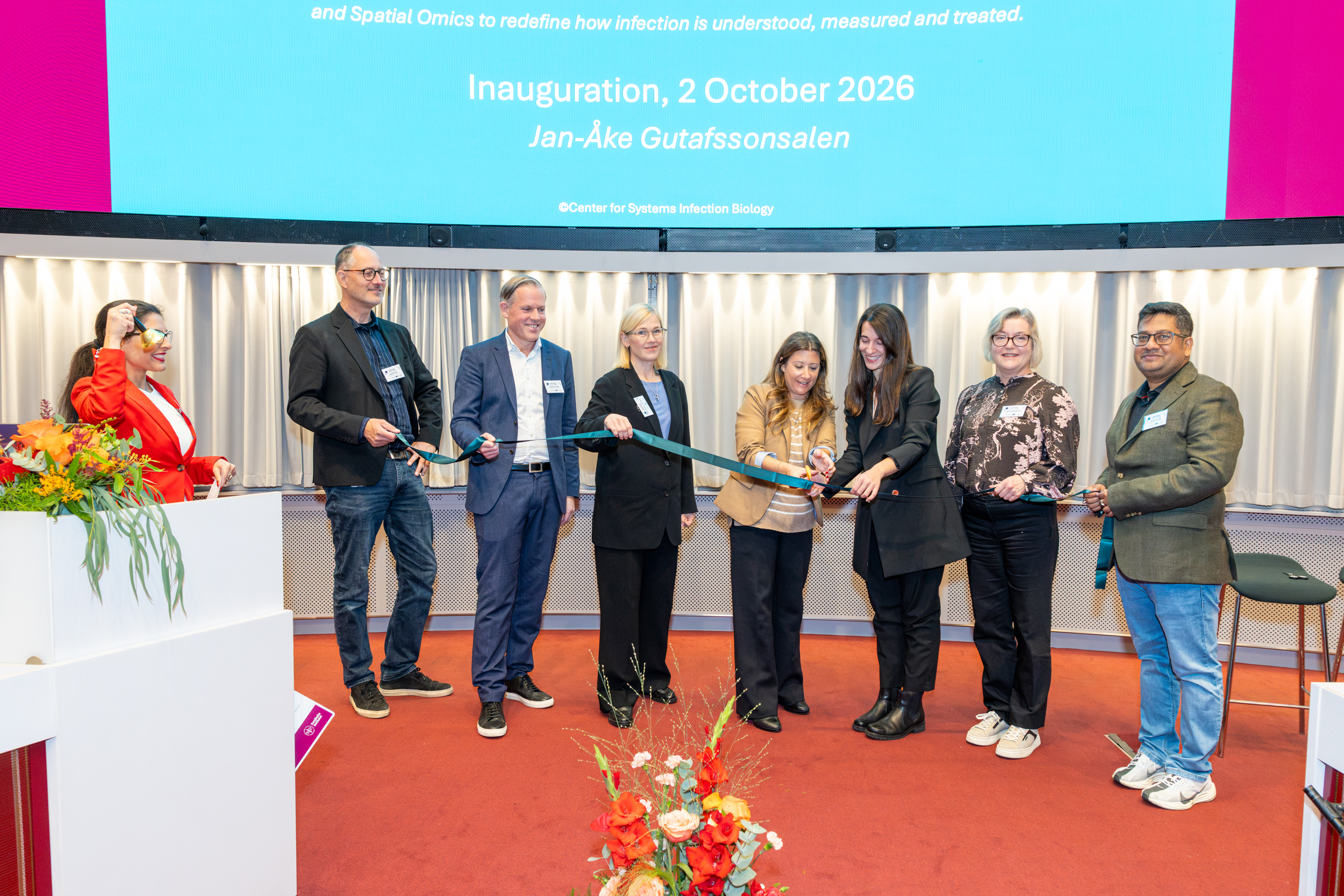
Center for Systems Infection Biology (CSIB) was recently inaugurated at Campus Flemingsberg. The new interdisciplinary initiative brings together research, advanced infrastructure and expertise to deepen the understanding of infectious diseases and accelerate the path from research to clinical application. We met with Director Ujjwal Neogi and Co-director Iva Filipovic to talk about the center’s goals, its strong focus on collaboration, and its ambition to contribute to pandemic preparedness.
Infectious diseases are among the leading causes of illness and death worldwide, and the COVID-19 pandemic in particular raised questions about the need for greater preparedness and resilience. These are challenges that the newly established CSIB at Karolinska Institutet aims to address through new research discoveries and improved conditions for collaboration, innovation and clinical application.
“The interdisciplinary approach and bringing basic research to society is the main goal for CSIB,” says Ujjwal Neogi.
Different expertise, one common goal

Ujjwal Neogi.
CSIB will serve as a platform where research, advanced infrastructure and expertise in infection biology, advanced microscopy and artificial intelligence come together. The center builds on several years of collaborative research funded through Swedish and European programs and grants. One example is the European Commission-funded COMBAT Dengue, a project in which Iva and Ujjwal have worked together as the leaders in recent years to combat dengue fever.
“We cannot fight infections alone. We need technology and a group of people from different backgrounds. I know viruses well, she knows cells well, so if we combine the two, we know where we can target. That is also the concept of the COMBAT project that we coordinate,” Ujjwal explains, illustrating the importance of bringing different areas of expertise together, both to understand why infectious disease occurs and to predict how people will respond to it.

Iva Filipovic.
In their respective roles as a virologist and an immunologist, they have long seen a need for a more comprehensive platform that can take their research further and help them understand infectious diseases at a systems level.
“I realized that the questions that I wanted to address were outgrowing the methods, the infrastructure and the abilities that I had myself. You really have to be able to understand what happens on a systemic level,” says Iva.
From a taxi ride to a new center
Their insights, combined with Ujjwal Neogi’s long-standing dream of creating a collaborative center, became the starting point for CSIB. It was during a taxi ride on a work trip to India earlier this year that they decided to turn the idea into reality.
Four months later, the center has now been inaugurated at Campus Flemingsberg. During the inauguration, the importance of meeting future infectious threats through collaboration across disciplines, sectors and international borders was highlighted, with leaders from organisations including the World Health Organization, the European Centre for Disease Prevention and Control and Huddinge Municipality present.
Better preparedness for a next pandemic
The center’s ambition to contribute to pandemic preparedness comes up several times during our conversation.
“We will not be able to stop an epidemic or pandemic from happening; that is not possible. But we should be prepared to defeat it,” says Ujjwal, referring to the opportunities for research and researchers to help strengthen the society’s ability to manage, understand, and respond to a virus when an epidemic or pandemic occurs.
Iva Filipovic also highlights the potential to enable earlier treatment and reduce unnecessary interventions by predicting more quickly who is at risk of deterioration and who is not. Ujjwal also points to the importance of communication:
“Communication is a big thing, and society should be communicated with at an earlier stage.”
Collaboration without borders
At the same time as the inauguration, the conference Virology Next 2026 was also held. A forum created by the team behind the center for interdisciplinary exchange and international dialogue, that brought together researchers, clinicians and public health experts from around the world.
And collaborations across disciplines, sectors and borders are also at the heart of CSIB’s work, both nationally and internationally. The center already has several collaborations underway and others taking shape across Europe and the United States.
“We want to give the center international recognition, so we are collaborating with several other cluster centers across Europe, among others, to establish some form of agreement,” says Iva.
Looking ahead, they aim to continue building an international network, help turn research into innovation, and to support early-career researchers in their journey. They also hope that discoveries emerging from the center can be translated into clinical applications, including in parts of the world where resources are limited.
With roots in Flemingsberg
While CSIB’s ambitions extend far beyond national borders, the heart of the initiative is at Campus Flemingsberg.
“We are both scientifically born in Flemingsberg and have seen the potential and the opportunities in this campus because we are next to the hospital. This is also one of the thoughts, that we can showcase the basic research to the clinicians, who can then take it further to patients.”, says Ujjwal.
The team and the vision for a community-driven center
In addition to Iva and Ujjwal, CSIB’s growing team includes both principal investigators, research specialists and PhD students.
“The team really reflects what we are striving for. The interdisciplinary team with many different nationalities and people at different stages of their careers working as one. It is a very supportive environment to be in”, says Iva.
When we ask where they see CSIB in five years, the answers come quickly. Iva envisions a physical center, CSIB in a building of its own here at Campus Flemingsberg. Ujjwal agrees and fills in:
“We don’t want to just build another center where people are within four walls and work on their own things. This should be a community-driven center where we have all disciplines coming together,”, he concludes.
Learn more about the Center for Systems Infection Biology at Karolinska Institutet here.